


How a Full-Time Cop Built a $3.5M Real Estate Portfolio Without Quitting His Day Job



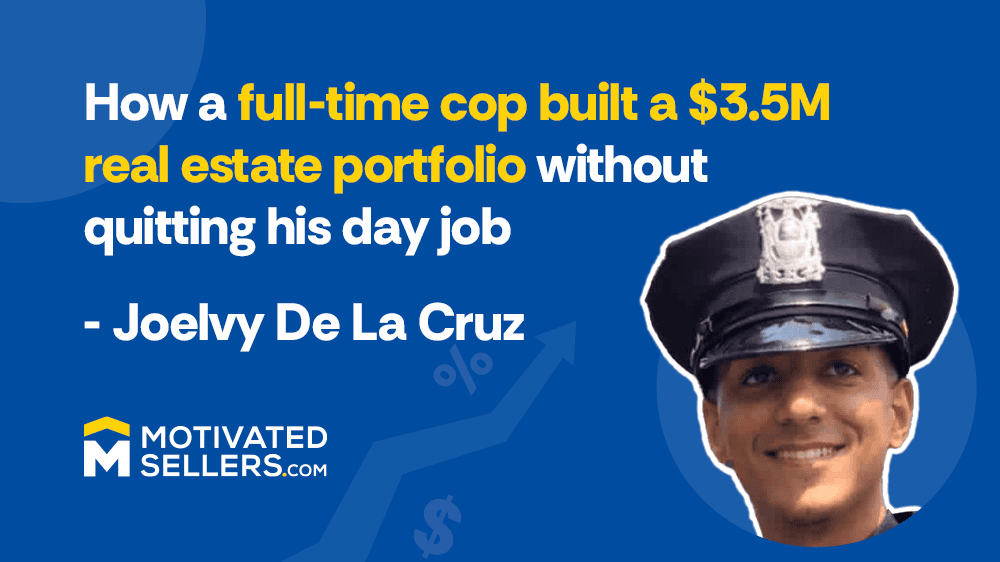
Joelvy De La Cruz is an active first responder and former NYPD officer. He has built a $3.5 million rental portfolio, raised nearly $1 million in private capital, and generates over $20,000 per month in passive income, all while still working full-time on the force.
Here is a preview of what you'll learn in this blog:
- How Joelvy negotiated his first deal: 2% interest rate when banks were charging 7-9%
- Why his first tenant paid him $5,000/month on a $953 mortgage payment
- The tax strategy that gets his family full refunds on income taxes paid
- How to verify real estate partners and avoid getting deals stolen
- Why Connecticut became his market of choice over New York
- The power of building relationships with tired landlords
How Did You Get Started in Real Estate?
"I was working a lot. And I saw a lot of my coworkers working overtime, patching up their pension," Joelvy recalls. "One day I was just burnt out with all the work involved." That burnout became the catalyst for change.
One day while scrolling Instagram, Joelvy came across ads from three real estate coaches: Grant Cardone, Robert Kiyosaki, and Pace Morby. At first the message didn’t click but Grant Cardone said something that caught Joelvy’s attention. Grant Cardone mentioned that you need to buy a 300-unit apartment complex for your first deal. At this statement, Joelvy realized that this first big step is not for him. He then read Rich Dad, Poor Dad and invested in a local mentorship program to get hands-on guidance.
How Did You Close Your First Deal?
Joelvy spent two years trying to close his first deal using the traditional method. "I was constantly putting in offers and getting outbid," he explains. This was 2022-2023, when interest rates were climbing rapidly and competition was fierce.
"That's when I started listening to what Pace Morby said and learned creative finance, learned what seller finance was and implemented it. And it was the best thing I've ever done and learned."
After two years of struggle, Joelvy met a tired landlord. The property has been sitting on the market for 6 months. The seller was an established landlord with a multimillion-dollar portfolio. They understood creative financing and were willing to opt for steady, passive income without the headaches of management.
The deal had to be negotiated over several months. The seller first wanted a 6% interest rate but Joelvy was able to negotiate a rate of 2%. Keep in mind that interest rates in 2023 were close to 7%-8%.
Here is the final deal structure:
Purchase Terms:
- Paid $50,000 over asking price
- Owner financing with 10% down payment
- 2% interest rate (when banks were charging 7-9%)
- Monthly payment to seller: $953
- Add taxes and insurance: approximately $1,100-$1,200 total
- The Outcome: His first tenant was an insurance company that paid a monthly rent of $5,000 for three months. Once the tenant left and he transitioned to standard rentals, the cash flow remained exceptional thanks to that 2% interest rate.
What Are Some Tactics for Scaling Your Investment Business?
Joelvy’s wife decided to leave her full-time job to support his investment efforts.
"By her leaving her full-time job, we were able to qualify her as a real estate professional."
Understanding Real Estate Professional Status
The IRS allows individuals who spend more than 750 hours per year (and more than 50% of their working time) in real estate activities to qualify as "real estate professionals." That’s how you can deduct rental real estate losses against active income.
How to Use Private Money for Scaling Your Business?
Joelvy didn't use his own capital for that first deal. The 10% down payment came from another first responder who saw an opportunity for double-digit returns. The funding for his subsequent deals came as private money from his coworkers and the sub-2 community. This model allowed Joelvy to raise $1 million in private capital for funding his $3.5 million portfolio without taking on traditional bank debt.
Why Connecticut Over New York?
New York is not a favorable state considering landlord-tenant laws. Connecticut, which is closer to New York, has better landlord-tenant laws. That allowed Joelvy to invest in a closer market with lenient regulations to help his business. His wife could handle property management without being too far away. The private money lenders could also easily visit and verify the properties.
The Tired Landlord Who Changed Everything
Joelvy’s first client was a tired landlord with a real estate portfolio he wanted to get rid of. He kept selling him rental properties one by one. With this relationship, Joelvy has been able to negotiate owner-financed deals and subject-to acquisitions.
One good relationship with an established landlord can be worth more than hundreds of cold calls. Tired landlords with large portfolios want to offload properties, but they don't want the hassle of listing, showing, and negotiating with dozens of buyers. When you prove you can close smoothly and make their life easy, you become their go-to buyer.
Why Creative Finance Is the Move for 2026
When asked why creative financing strategies like seller finance and subject-to are perfect for 2026, Joelvy's answer is simple: speed and simplicity.
"If you are able to strike a good deal with a seller, you can close faster. You can waive inspection. You can waive appraisals. You don’t have to show your tax returns or W-2 pay stubs to qualify. This is a straight-up transaction with the seller."
Traditional Bank Financing vs. Creative Finance
Traditional Bank Loan:
- Requires tax returns, W-2s, pay stubs
- Strict debt-to-income ratios
- Full appraisal required
- 30-45+ day closing timeline
- Extensive documentation and verification
- Credit score requirements
- Down payment requirements (often 20-25% for investment properties)
Creative Finance:
- Direct negotiation with seller
- Flexible terms based on the needs of both parties
- Close as fast as title search is complete
- Can structure around any situation
- No bank approval needed
In competitive markets, the ability to close in 7-14 days instead of 30-45 days can be the difference between getting the deal and losing it to another investor.
Unique Skills Common in Police Academy and Real Estate
Cops must communicate with people to de-escalate a situation. You must ask the right questions, read body language, and convince people to act. These skills are of immense value in the investing world as you knock on doors, try cold-calling, or negotiate with sellers in distressed situations.
These exact skills are critical in real estate, especially when working with distressed sellers.
What’s the Biggest Lesson You Learned Over the Years?
"I think one of the biggest mistakes that I've made is understanding who you can trust."
Early in his journey, Joelvy worked hard on a deal he thought would be his first. He trusted someone in the process. And that person went behind his back and took the deal.
That’s why Joelvy always verifies relationships before trusting someone.
How to Verify Real Estate Partners:
Request HUD Statements
- Verify seller financing claims
- Check purchase amounts and dates
- Confirm deal structure details
- Ask to see multiple deals, not just one
Look Up LLCs
- Use opencorporates.com (free)
- Verify ownership structure
- Check registered agents
- Confirm business is active
Check Property Records
- Verify they own what they claim to own
- Look up addresses in public records
- Confirm acquisition dates match their story
Understand Legal Documents
- Know the difference between secured and unsecured promissory notes
- Always require a mortgage deed, not just a promissory note
- Ensure documents are recorded properly
"I hear a lot of horror stories, even from people that I know personally. They’ve lent money out only after seeing a promissory note and then they don’t get paid back. They have to file a lawsuit.”
What Would You Do Today If You Had to Start Over from Scratch?
If Joelvy had to start over today with nothing, his approach would be to get into the right room with the right people.
His journey took him through two phases:
Phase 1: Foundation Building He started with a local mentorship that taught him the fundamentals—how to analyze deals, understand markets, and navigate the basics of real estate investing. This gave him the foundation he needed.
Phase 2: Strategy Specialization Then he entered the creative finance community (specifically Pace Morby's sub-2 community), which taught him how to actually execute deals without traditional financing.
"The right room (creative finance world) helped me receive feedback from leaders in that community. I understood underwriting and deal structure.”
What’s Next for Joelvy on a Personal and Professional Basis?
Personally, Joelvy is focused on raising his children and continuing to follow his faith. But professionally, he's shifting toward education and giving back.
He's launching a free Zoom session specifically for first responders and W-2 workers who want to learn how to save money on taxes through rental property ownership. His goal is to help other first responders accumulate financial freedom through investing.