

What a $2B TV Executive Can Teach You About Real Estate Investing



Every investor in this industry says the same three words: we buy houses.
Same offer. Same script. Same yard signs on the same street corners. So when a seller has five cash buyers calling in the same week, what actually makes them pick you?
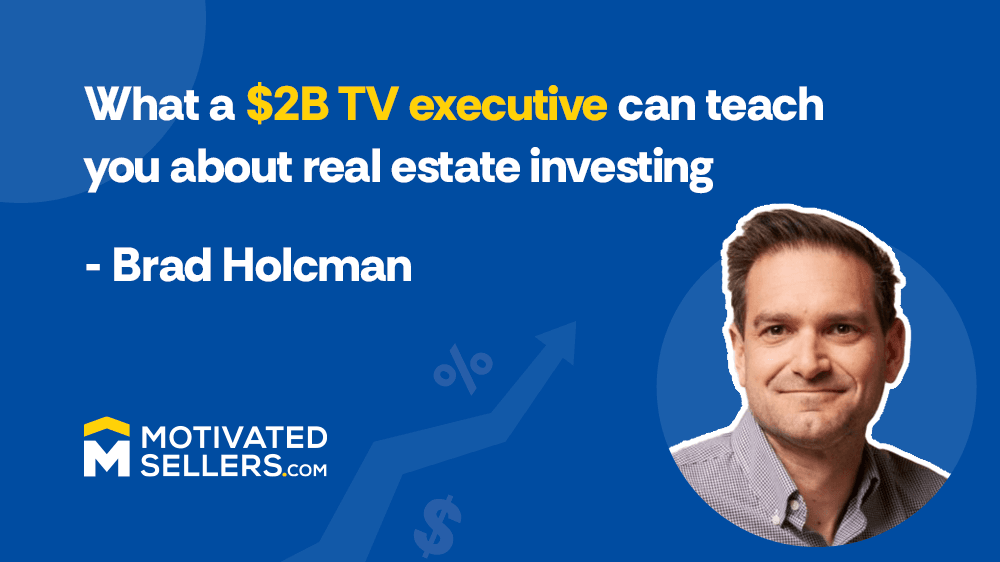
That's the question Brad Holcman has spent a career answering. He first worked in the television industry and now is a successful investor in Charlotte. Brad spent over 20 years producing television, overseeing more than $2 billion in content and over a hundred series, before walking away to become a volunteer firefighter, a flipper, and the founder of a personal branding framework called the $2 Bill. In this interview, he breaks down exactly how he found his own differentiator and how you can find yours.
Successful TV Shows and Volunteer Firefighters
For over two decades, Brad was a television executive at A&E, greenlighting and producing hit shows like 60 Days In, Duck Dynasty, Beyond Scared Straight, Rookie Year, Homeland, Sons of Anarchy, and Intervention. He decided what got made and what didn't. Then, during the pandemic, watching first responders on the news, he made an unusual call for a network executive.
"What a sane W-2 employee would do is decide to become a volunteer firefighter and run toward the fire instead of away from it."
That decision changed how he saw his own career. Brad uses a mountain-climbing analogy to explain the pivot: there's only one person who was first to summit Everest, but thousands of people have climbed it since. They have the skill, but they never get to plant their own flag—because the mountain's already been named. Brad felt like he'd reached the top of the mountain he could climb inside a network structure. So he went looking for one he could name himself.
That search led him into real estate.
What Reality TV Doesn't Show You
Before Brad ever flipped a house of his own, he'd produced hundreds of hours of real estate television. That gave him a front-row seat to how different the on-screen version of investing is from the real thing.
The biggest myth, in his words, is that television compresses everything into conflict and story, because a 90-day renovation has to fit into a 40-minute episode. "We're not going to show you the boring days when nothing happens—literally watching paint dry—because that's not great television. We're only going to show you the conflict and the fun."
The deals are real, and the numbers are accurate, but the pacing is manufactured. An unfinished bathroom might be skipped entirely because the production window closed before the crew could film it.
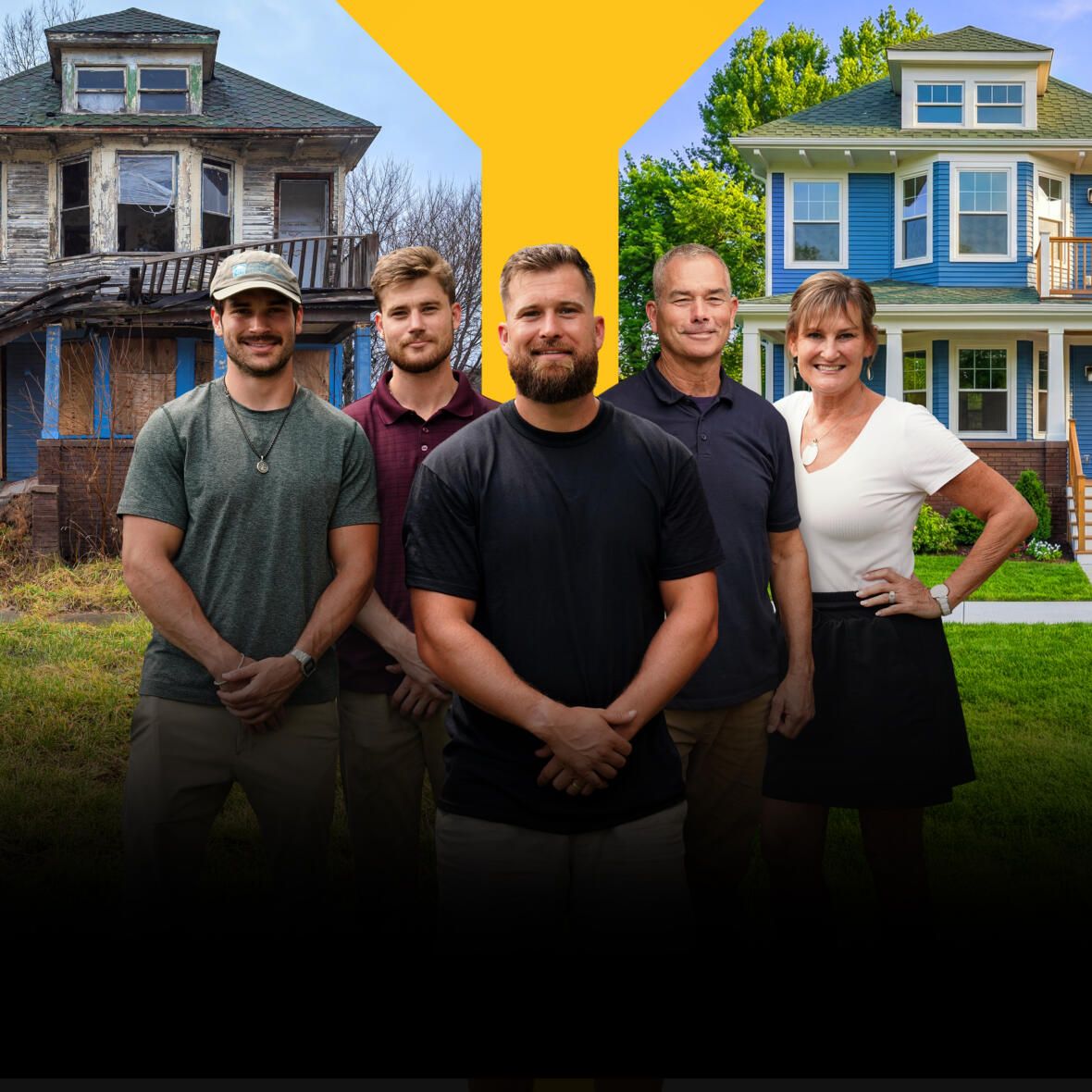
Here's an interesting fact: Brad talks about his friend Tommy Harr, a flipper whose new A&E show, Zombie House Flipping: Family Business, premiered on May 30, 2026. Having a camera crew around pushed Tommy to take on tougher projects, because his reputation was suddenly public. The show ended up improving Tommy Harr’s business.
That's the through-line from Brad's media career into his real estate one: he's spent his whole professional life understanding that a good story, told consistently, is worth more than a good product alone.
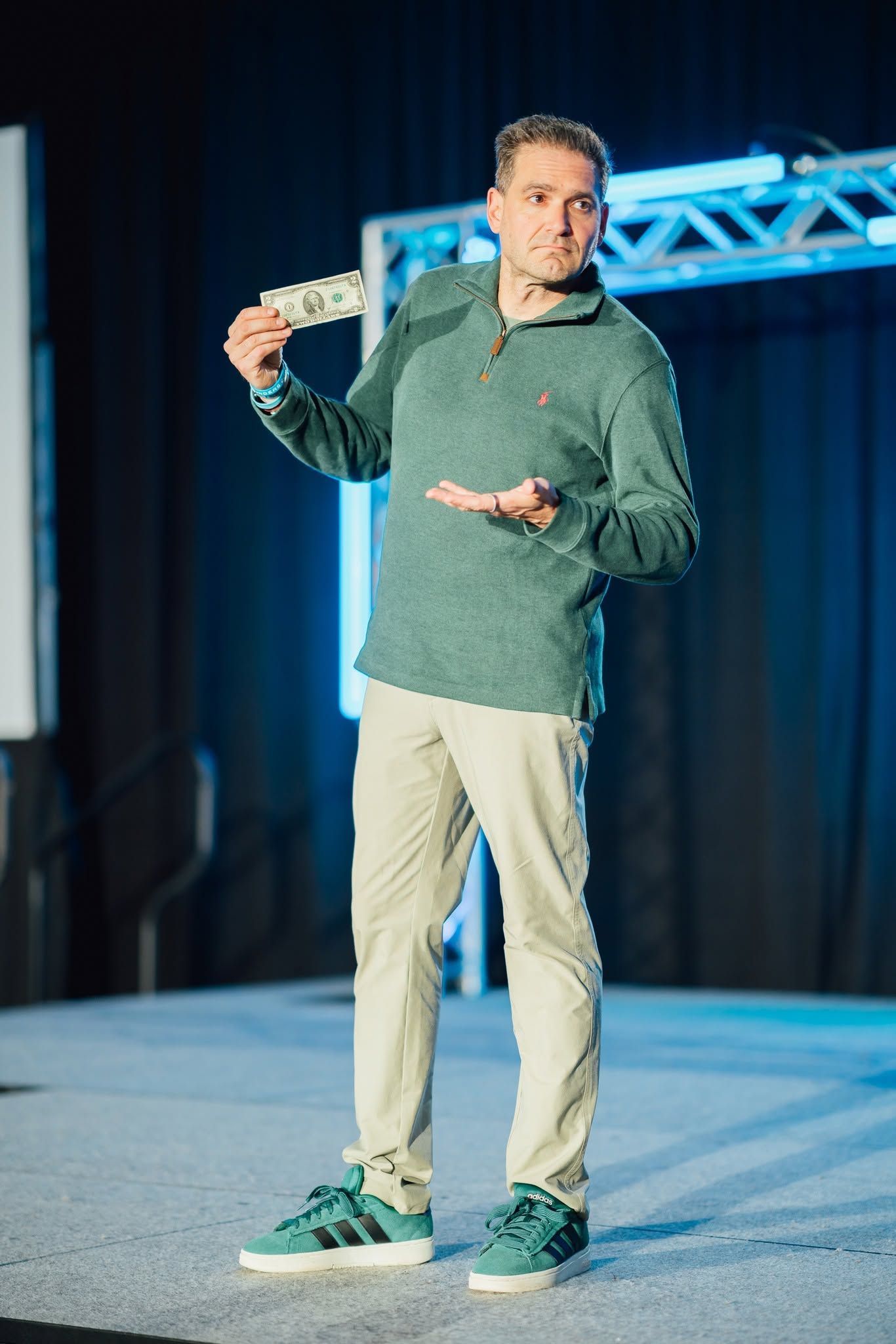
The $2 Bill: Why You Won’t Win Even if You are the Best
Why are you the best? Or in other words, why do you consider yourself best at any given thing? It’s actually very challenging to prove that you are the best—but it can be proven that you are the only one who does this right.
You don't win by being the biggest, flashiest, or highest-priced cash buyer on the block. You win by being memorable in a way nobody else in your market is. Provide an unforgettable experience if you want to differentiate yourself from others.
The $25 Chipotle Run That Beat Every Competing Offer
Brad Holcman was coaching a wholesaler who was doing one or two deals in a month. Brad asked him questions and listened to his story. After a couple of questions, the wholesaler mentioned an interesting story:
“I was running late to a seller appointment because I was hungry and didn’t want to eat in front of the seller or show up late. So instead, I called and asked the seller what her favorite lunch spot was. She said Chipotle. I ordered two meals and ate together with the seller. Half an hour later, I had a signed contract, which resulted in an $8,500 profit."
That’s when Brand came up with a USP (Unique selling Proposition).
"Twenty-five dollars of Chipotle got you an $8,500 contract. You're the buyer who brings lunch."
The math is simple. Your cost of bringing lunch is $2,500 for 100 appointments. Even with 1% conversion rate, you can make $8,500 and come out profitable. But the real ROI is not the money. It’s the word-of-mouth marketing you get. The other 99% of people who didn’t sign up will tell everyone in their circle about “the buyer who brings lunch. "You cannot buy this marketing with a bigger ad budget. When this strategy was implemented, Brad’s client went from one or two deals a month to six or more.
How to Find Your Own $2 Bill
What are you doing differently from others? Investors need to find their own version of the $2 bill to succeed in this industry.
Pick one lane and repeat it relentlessly. If it's 1970s ranch homes in one zip code, say that — every day, multiple times a day. Consistency will set you apart.
Look for what you're already doing that you've never named. Brad's wholesaler client had been "the guy who brings lunch" without realizing it was his differentiator. Sometimes it takes someone else pulling the story out of you.
Make it authentic and repeatable, not a one-off. Doing something kind once doesn't build a reputation. Doing it every single time does.
Understand that reputation is what people say about you when you're not in the room. It’s always what the seller tells their neighbor after you leave.
The Only Variable You Manage
Brad says there's only one thing in any deal he can actually control:
"My signature next to the buy price. I can't control anything else."
(That’s a realistic approach because you don’t know when the house will sell and what will be the appraised value. Several factors are beyond your control.)
That’s why it’s important to buy at the right price. And that can only happen when you are not forcing deals.
Brad Holcman found his first deal via a Facebook group. It was an underpriced, badly advertised deal that wasn’t attracting buyers.
The deal ended up defying his own expectations. The property was a mile off the main road. He assumed it would be hard to sell that property but attracted two offers in the first two days. Since then Brad has completed 5 flips in about 14-15 months.
Brad is next interested in affordable, attainable housing, which is not the focus of many builders.
The Takeaway for Every "We Buy Houses" Investor
We receive this question a lot from real estate investors in our network:
- How do I differentiate myself from other cash buyers?
- The market is so saturated; how do you find good deals?
Brad Holcman has an unusual resume. He has been a network executive, volunteer firefighter, flipper, and brand coach. But the core lesson from this interview applies to every investor who is reading this article. It doesn’t matter how many deals you have closed.
In crowded markets, investors don’t win with the most number of cold calls or the highest cash offer. You must find a way to be memorable if you are to find true success in this industry.
Find your $2 bill. Then don't stop showing it to people.
Want more strategies from investors who've built a real edge in a crowded market? Explore more interviews on the MotivatedSellers.com blog, and see how our exclusive, off-market seller leads can help you put your own differentiator to work.