

He Cashed Out His Only Asset to Start a Wholesaling Business — It Worked



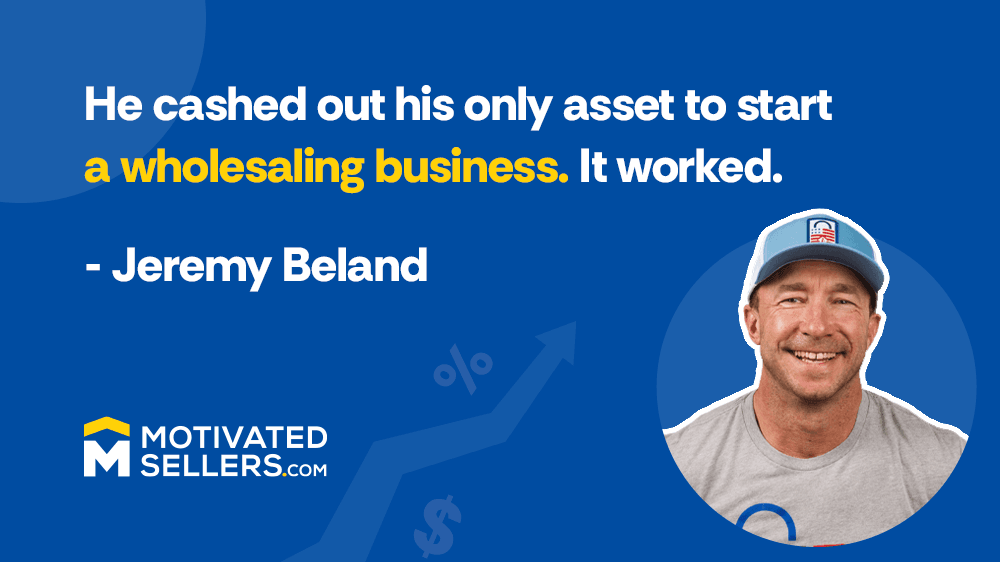
The odds were stacked against him. He had to take care of two kids, his marriage had ended, and he had to figure it all out again at 40. He knew life wouldn't go very far if he didn't pivot in a different direction. But how do you build a successful business with no capital and no support system?
At that time, Jeremy had no idea you could invest in real estate using other people's money. There was only one option left: let another year pass, or start investing immediately.
Broke at 40. Seven Figures by 50.
Jeremy wanted to invest in real estate. The only problem was that he had no money. But Jeremy took a step that most people would have avoided.
He sold his townhouse to access $17,000 in equity. He put $11,000 into setting up an LLC, a direct mail campaign, and a coaching program. Back then, he could only afford handwritten white postcards.
In March 2017, Jeremy closed his first wholesale deal for $5,000. He generated over $73,000 in revenue from 10 deals that year. That year was the foundation of what would become a seven-figure operation.
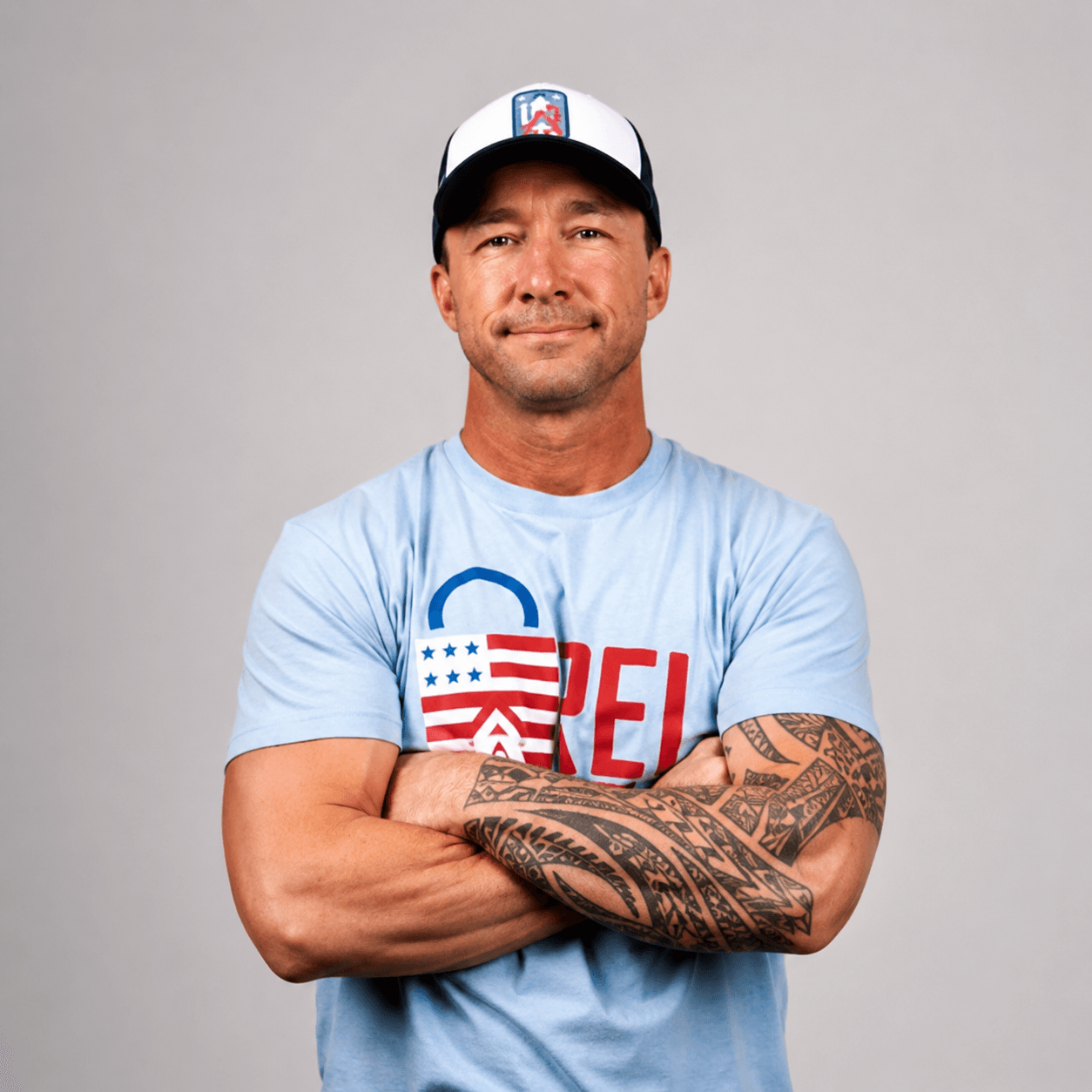
Today, Jeremy Beland runs REI Freedom, a coaching program built around off-market acquisition. He has closed over 500 transactions across New Hampshire, Massachusetts, Rhode Island, and Florida.
Let's hear from him directly about the exact tools, methods, and strategies he used to scale his successful business.
Where Do the Real Deals Come From?
"Good deals are not typically found on the MLS." Jeremy pauses for a moment to let that sink in.
"You have to build your own pipeline. Hunt off-market. You get to choose your leads—and from there, you decide your exit strategy."
For Jeremy and his team, PPC has been the #1 source for lead generation. PPC has been the most consistent performer across every market he's operated in over a decade.
New Investors Lose More Deals
Here's something most people don't want to hear: Give 70 same leads to a beginner and a seasoned acquisitions manager and you will get two different results. Beginners might close 1 or 2 deals, whereas the experienced operator may close 4 or 5.
"It's not about cost per lead," Jeremy says. "Everyone obsesses over that. But what actually separates someone doing 10 deals a year from someone doing 10 deals a month? It's the ability to qualify, build rapport, and convert a motivated seller."
The First Thing Jeremy Says to a Seller
"We Are Probably Not a Good Fit"
That's where I like to begin the conversation. Because it's the perfect way to let the guards down and move things toward a mutual negotiation.
Most homeowners assume a real estate investor is going to lowball them and that they'll have to fight for a better price.
"It's best not to tour the house first. You don't want the seller talking about the features of the property. You don't want to reject the house," says Jeremy. "It's best to have a one-on-one conversation in a friendly setting and talk about the offer and the numbers."
How to Walk Into a Seller Appointment
Here is a repeatable process that any investor can use, anywhere: a structured appointment framework.
"As we arrive at a seller appointment, we refuse to visit the house first. Instead, we ask to sit down, preferably in a living room rather than a kitchen, to create a relaxed, informal setting. And then the conversation begins."
The first sentence goes like this:
"Mr./Mrs. [Name], I want to be honest with you. We are probably not a good fit for each other. I've been doing this a long time, and I know when it's not going to work. We're probably not going to do business together today. We hope it happens, but it probably won't.
So if at any point you feel like this isn't working for you, just say the word and I'll politely excuse myself. Does that sound fair?
And on the other hand, I may realize this doesn't work for me either. If that happens, would it be okay if I said the same thing and excused myself? Does that sound fair?"
That one exchange sets the tone for everything that follows. Both parties have agreed to be honest. Neither one is locked in. And just like that, the dynamic shifts. Instead of a seller bracing for a lowball and an investor trying to close, you have two people asking the same question: are we actually a good fit?
From there, the conversation naturally moves to why they want to sell. I'm listening for the real pain points, not just what they say but also what's underneath it. If a seller has inherited a property and mentions feeling overwhelmed by decades of accumulated belongings, it might be worth asking the following:
"If you could take what you wanted and leave everything else behind, would that be helpful?"
Once the conversation is done and we've walked through the house, the seller has already decided whether they want to work with us or not.
If they do, it's not really a negotiation anymore. We're just finding a number that works for both sides. And if they don't want to sell, no negotiation tactic is going to change that outcome.

Why Cost Per Lead Doesn't Matter If You Can't Convert
High-volume investors follow up 5 to 8 times. They are big on marketing, and follow-up happens through social media, text messages, email, phone calls, and other avenues. Most deals in real estate (and in sales) happen between the 5th and 12th touch. Yet most investors never make a single follow-up call after the first contact, and fewer make it to a 7th follow-up.
In 2022, Beland's team pulled in $500,000 in revenue directly from their existing database. The average lead in their database had existed for 600 days. Generating half a million from that database required a rigorous follow-up approach for about two years before those leads eventually converted.
What are the Best Performing Markets According to Jeremy Beland?
Jeremy is currently investing in New Hampshire, Massachusetts, Rhode Island, Florida, and Mississippi.
"The greater Boston area (New Hampshire, Massachusetts) is a smaller market and it's more competitive now than 10 years ago. The cost-per-lead and cost-per-click are fairly high and you must make sure that you have a system for converting those leads," explains Jeremy.
"We just acquired a property through our direct marketing channels. The ARV on that house was $350,000 to $370,000 but the house was flooded and neglected, and it required a complete gut renovation. We were able to acquire the house for $106,000. We cleaned the house, got everything out, and then we listed it on the MLS with our realtor. The house went under contract in two weeks and after our closing costs, we will net $125,000 without any construction work."
What are the Biggest Mistakes Made by Investors?
"Most people don't invest in mentorship because they think learning is possible through free YouTube content or ChatGPT queries. The reality is less than 10% of people who get into wholesaling ever close their first deal, and only about 1 to 2% will still be doing deals after a year."
"Even before I became a coach, whenever I wanted to learn something, whether it was private money or becoming a CEO in this business, I went and found a coach for it. I was always willing to invest in learning. A lot of people don't share that mindset."
"The second big issue is analysis paralysis. People are afraid to make mistakes, so they just keep researching and never take action. But failure is inevitable. You just have to embrace it."
What Opportunities are You Seeing in the Next 12 to 24 Months?
(Most real estate investors try not to predict the future because of how crazy things have been in the past few months, but this question always yields important insights about the do's and don'ts in specific investing markets.)
Jeremy replied that we never know what's going to happen in the future.
"Interest rates rise and fall. COVID hit. The political climate shifts. In the last five years, the market has been up, down, left, and right. It was a steady upward trend from 2013 to 2020 but now it's like a roller coaster."
"One thing has happened already and we'll see more of it. It's about wholesaling regulations. In South Carolina, you're not even allowed to pre-market deals or double close. Ohio just passed new laws. It's happening in more and more states." (Read our blog about wholesaling regulations.)
"If you're listening to this and haven't taken action yet, don't wait. Start learning how to acquire off-market deals as soon as possible, because it takes a couple of years to really master it. And if wholesaling does get restricted, 90% of your competition disappears overnight. But only those who've already learned to buy with other people's money and sell on the MLS will thrive."
What Would You Do Today If You Had Nothing But Your Wisdom and $10,000 to $15,000?
Jeremy gave a thoughtful response to this question.
"I love that you said $10,000 to $15,000, because I talk to people all the time who say they have nothing but still expect to become a millionaire wholesaling. I wish it were that easy, but it isn't."
I will first invest in a mentor who is actively doing the type of business I want to do. It can be flipping, wholesaling, or off-market acquisition. Make sure you actually connect with the mentor.
Second, I will start marketing after setting up my LLC. And the marketing budget must last at least three months. (Many of our expert investors recommend 6 months.) With good coaching and consistent marketing, you can expect your first deal within three to four months on average. Make sure you have enough budget to sustain that runway.
Once I start generating leads, I will work hard to get on the phone, qualify leads, take appointments, and try my best to lock up a deal.
For marketing channels starting out, I'd focus on outbound: text messaging, cold calling, direct mail, or pay-per-lead. I would not invest in PPC, TV, radio, or SEO right away. You need to keep your cost per lead down while you're still learning. Keep in mind that with direct mail, cold calling, and texting, the average conversion cycle from lead to close is about six months. In those first few months, you're looking for low-hanging fruit, the seller you caught at exactly the right time. That might be one or two out of every ten deals. The rest will come from months of consistent follow-up.
Pay-per-lead can be a faster path, closer to 120 days on average, but it's still a numbers game. Depending on your market, you may need to touch 10,000 properties before closing a deal. That's why it takes a few months to get momentum. But stay consistent, build your follow-up system, and a year in you'll find yourself closing new leads alongside deals that have been in your pipeline for months.